Showing posts with label Pollination. Show all posts

Sunday, 13 February 2022

Valentine Beyond Humans

Can a tree or a plant be your valentine

Or birds and animals?

Or insects, bees, butterflies and moths?

Yes, why not?

Because our existence is dependent upon the well being of all such valentines.

We need the insects, ants, bees, moths, butterflies and birds for pollination. 

We need the trees and plants to give us oxygen. Remember the Chipko movement when the rural folks in India saved the trees from uncontrolled felling? Borrowing a line from Chipko movement, "Green isn't just a color. It's the tender smile of plants, and the cool breeze of trees."

Trees also give us leaves which give us shade and regenerate the soil after falling. Trees give us wood for making houses and furniture.

Birds provide insect and rodent control, plant pollination, and seed dispersal which are essential for sustaining life on our planet.

We need the animals to sustain the food chain and the ecological balance.

Therefore, this Valentine's Day, Ghumakkad offers his greetings to all the valentines- humans and beyond. Valentine is all about sending your wishes to a person whom you love. Ghumakkad loves Nature and so do you the reader! Therefore, let us together say 'Go Green' this valentine and save Nature.

Happy Valentine's Day to all. Let the Nature be your valentine.

Stay safe and remain connected.

    - Harsh-the-Ghumakkad with Neeta Bhargava/14th Feb 2022

#valentinesday2022 #valentine #treesasvalentine #plants #gogreen #natureasvalentine #savetheenvironment #saveNature #valentineofadifferentkind #ghumakkadhb #ghumakkadharsh #pollination #seeddispersal #rodentcontrol #soilregeneration

Friday, 6 December 2019

Celosia Cockscomb KBG-27

Magenta flowers.
Velvety.
Wavy.
Hardy.
Blooms last for many days.
Which flower is that?
KBG-27 Kaun Banega Ghumakkad had posed this question last week.

Answer: Celosia Cockscomb or Celosia Cristata or Murgkesh  मुर्गकेश in Hindi. It is called Seethamma Jada in Telugu.
Why this name? Because the flower is shaped like the comb on a cock's head!

This annual plant has a velvety, ruffled form that is 
often compared to a cockscomb, or even a brain. See 
the picture above.

In fact, it's commonly known as cockscomb or woolflower. Celosia seems like an exotic flower, but it's not difficult to grow in the home garden. It makes a striking accent to other flowers in the garden. In fact the saplings in our garden were brought by our domestic help from her neighbourhood growing wild.


Few more pictures of the flower from our garden in Secunderabad, India.


See the pollinator at work on a cockscomb flower. 

Being a common flower across the world, the contest drew more than 350 participants with more than 50 correct answers. First three correct answers came within 10 minutes of posting the contest on-line. Advance intimation of the Contest gave equal chances to participants across time zones.

Congratulations to the winners of KBG-27 listed below:

  1. Poornima Tangirala, IT Professional Hyderabad
  2. Rohini Tiwari, PhD, Former Professor, Nutrition and Wellness Consultant, Coimbatore Tamil Nadu
  3. Col Jaishankar, Indian Army. Blogger, traveller and environmentalist.

We are grateful to all the participants for their continued support. Those who missed the awards by a few minutes, be faster in responding next time.

Special thanks go to Dr Chitra Shanker for research guidance and Ramya Sriram for the logo design.

Thanks for browsing. Stay connected.

     -  Harsh-the-Ghumakkad/ 6th Nov 2019

#kbg #kaunbanegaghumakkad #onlinecontest #environment #nature #awareness #fun #quickresponse #shootfast #firstthree #kbgwinner #ghumakkadhb #ghumakkadharsh #celosiacockscomb #cockscomb #knowyourenvironment #wanderers #photowalks #learningfromnature #plants #powerofobservation #learningfromplants #funwatchingflowers

Tuesday, 2 June 2015

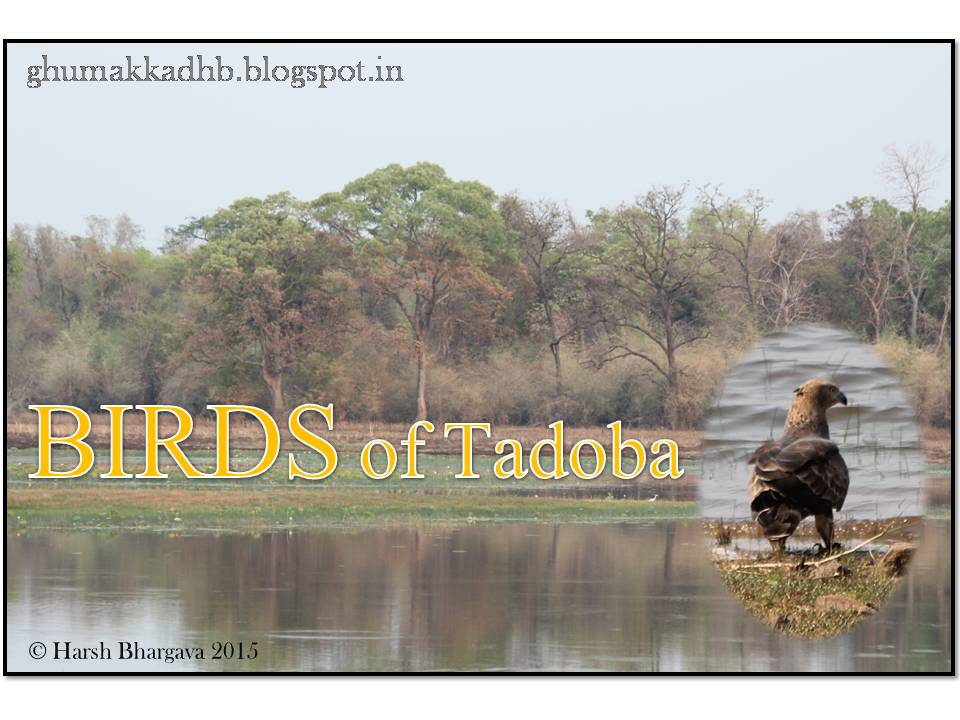
Birds of Tadoba


Matching the Majesty of the Tiger- Magical Birds of Tadoba

Tadoba is known for its tigers. Rightly so.
But tigers can’t thrive unless they get their prey like spotted deer, sambhar, bison and langurs. And these animals can’t survive unless there is plenty of grass and leaves to eat -- which means there has to be enough trees and plants. And who assures the growth of trees, plants and flowers? Birds. How?
Birds help in pollination of trees, plants and flowers. They are an essential part of the food chain- even a school child will tell us that.
Therefore, if the King of the Jungle continues to rule his kingdom, birds are an essential part of it. Tadoba jungles are an example of balanced environment. 
Having seen the tigers in the wild , this story captures the birds sighted in Tadoba during two days in May 2015. Those of you who wish to go to Tadoba by road from Hyderabad , browse the story.

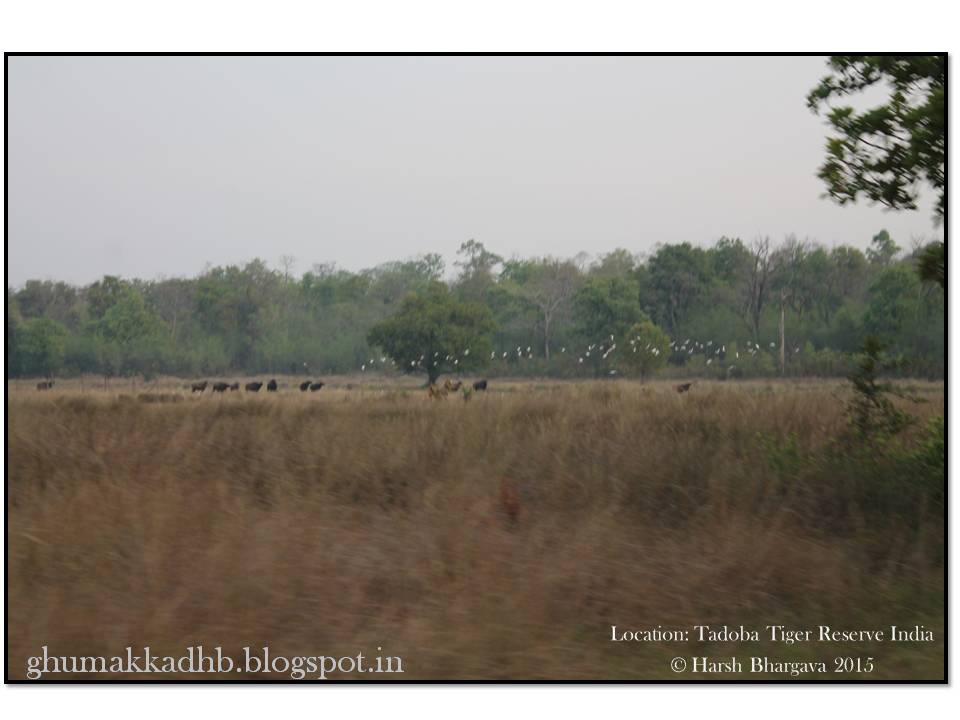
A word about photography from a moving 4x4 vehicle in the jungle. It is a tough call to capture birds from a moving vehicle. It is best done on foot. However, in Tiger reserves, you are not allowed to get out of the vehicle. Therefore, you try your best to keep the camera steady. Use a tripod or a monopod or even a bean bag kept on the handle bar of the safari vehicle!

See the picture below which has camera shake despite the precautions.
But photographers don't give up easily. Here are some selected shots. For ease of readability, we have categorised the birds of Tadoba into the following categories:

1.      Jungle beauties
2.      Waders and ducks
3.      Predators


Jungle Beauties


Lapwings in flight, probably trying to ward off a predator attacking a young duckling.

Animals and birds exist peacefully in the jungle.


Even the langurs are keen bird watchers!


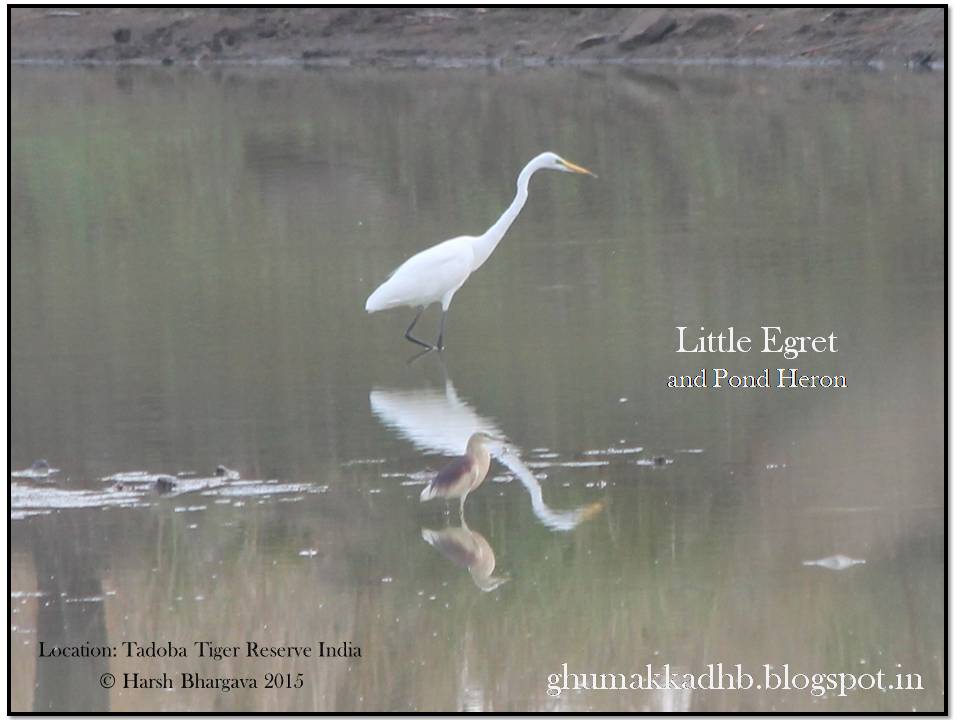
 Waders


The lakes in Tadoba are home to many varieties of ducks.


Predators can't be far! We could capture two of them. Oriental Honey Buzzard (OHB) which feeds on the honey from beehives. We spotted an OHB near the lake to have water. Notice the beak and the talons.


Another OHB silhouetted against the sky.

And the mighty Eagle-- the Indian Serpent Eagle.

Oops, and the camera captured some birds of a different kind!
We also saw the nail marks of wild boar/sloth bear who feed on bees. It climbs a tree having beehives.

See some more pictures of birds from earlier 'shoots' in Ranthambhore Tiger Park.

It was time to say good bye to Tadoba.
Hope you enjoyed the birds.
Please do share your experience/pictures.

Bye till the next post,

     -   Harsh-the-Ghumakkad/ 1st June 2015